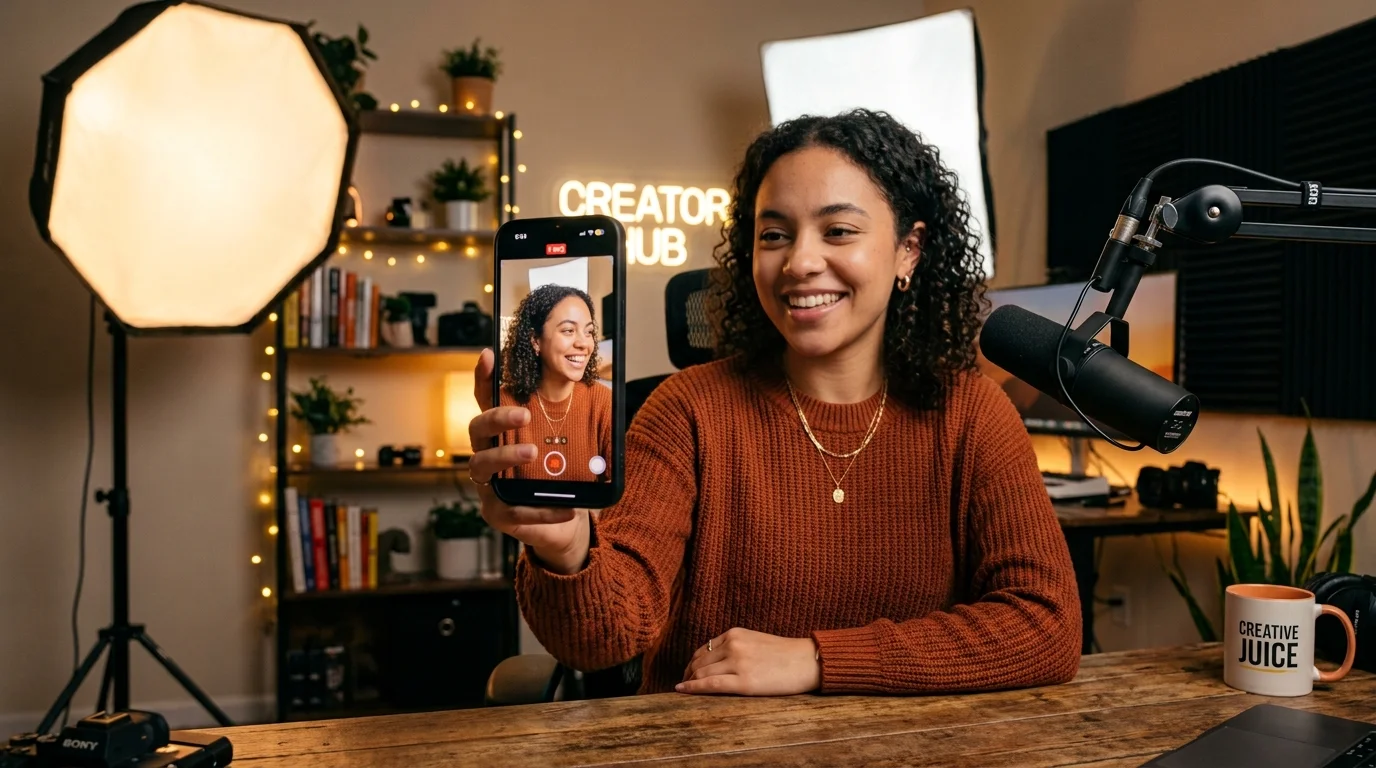
Content creation has completely changed the way people think about smartphone cameras. It’s no longer just about taking a nice photo on vacation. For millions of creators, a phone camera is a full production studio. It has to handle vlogs, Reels, TikToks, product shots, and client work, often all in the same day.
The good news is that phone cameras have gotten so advanced in 2026. Many creators are ditching bulky mirrorless setups entirely. They shoot straight from their pocket instead.
But not every phone is built the same way for creators. This guide breaks down exactly what to look for, then points to specific phones worth considering for different content styles.
Our Picks for Content Creators
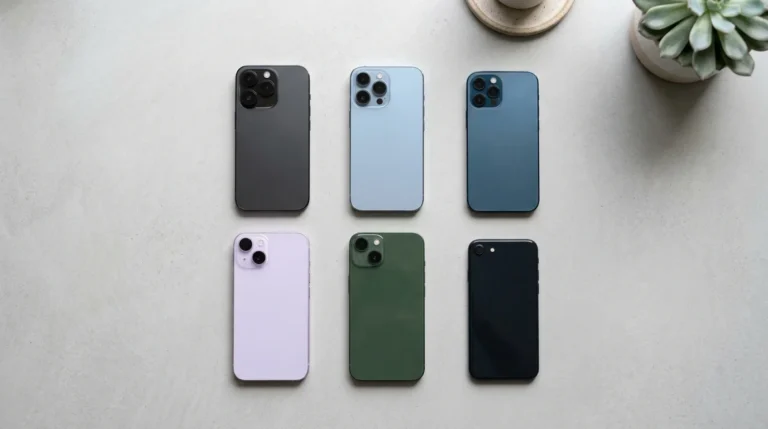
Best Overall ( iPhone 17 Pro Max): Strong stabilization, reliable Log video support, and consistent color science across lighting conditions make this the safest all-around pick for creators who film a mix of content types.
Best for Android (Samsung Galaxy S26 Ultra): A versatile lens setup with genuine optical zoom range, paired with strong low-light performance, suits creators who shoot everything from product close-ups to wide vlogging shots.
Best for Vlogging ( Google Pixel 10 Pro): Excellent computational photography and some of the strongest software-based stabilization available make handheld walking shots noticeably smoother straight out of the camera app.
Best for Talking-Head Content ( iPhone 17): A wide, sharp front camera with strong autofocus and solid low-light performance makes this a smart pick for creators who spend most of their time facing the lens.
Best Mid-Range Option ( Google Pixel 9a): Strong computational photography at a fraction of flagship pricing, making it a sensible starting point for creators who mostly shoot in good lighting and don’t need Log video.
Why Megapixels Aren’t the Whole Story Anymore
For years, phone marketing pushed megapixel counts as the ultimate measure of camera quality. That thinking is outdated in 2026. A sensor with fewer, larger pixels often captures more light and detail than one packed with tiny pixels. What actually matters now is how the phone processes what the sensor captures. This is where computational photography comes in. It uses on-device AI to sharpen detail, balance exposure, and clean up noise in real time.
When comparing phones, look past the megapixel number on the box. Focus on sensor size instead, and on how well the camera performs in real-world conditions. This matters most indoors or in mixed lighting, since that’s where most everyday content actually gets filmed.
Stabilization: The Feature That Makes or Breaks Vlogging
If your content involves any kind of movement, stabilization should be one of your top priorities. This includes walking shots, handheld interviews, or on-the-go vlogging. A phone with weak stabilization turns every walking shot into something shaky and unusable. You’ll end up reshooting or relying heavily on gimbals and rigs.
The best phones for creators in 2026 combine optical image stabilization with software-based stabilization modes. These are designed specifically for walking or action shots. They crop into the frame slightly to smooth out motion. It’s worth checking whether a phone offers a dedicated “action” or “steady” video mode before buying.
Low-Light Performance for Indoor Creators
Not everyone films in a perfectly lit studio. A huge amount of content happens in average indoor lighting, think desk setups, bedroom vlogs, or evening filming. This is exactly where cheaper phones tend to fall apart. The moment lighting isn’t ideal, they produce grainy, noisy footage.
Phones that perform well in low light typically use larger sensors. They also rely on stronger night-processing algorithms that brighten a scene without introducing heavy grain or blur. If most of your content happens indoors or after dark, weigh this more heavily than almost any other camera spec.
Video Codecs and Editing Workflow
Shooting great footage is only half the job. You also need to get it off your phone and into your editing software without a headache. This is where video codecs and file formats matter more than people expect.
Some phones default to formats that are heavily compressed and lose quality when edited. Others offer more editing-friendly formats, like Log profiles or higher-bitrate recording modes aimed at professional-style color grading.
If you plan to do serious color correction, look for a phone that supports Log or RAW-style video capture. If you mostly post straight from your phone with light editing, a simpler, more automatic camera system will likely save you time.
Storage Space: The Silent Content Killer
High-resolution video eats through storage incredibly fast. This is especially true if you’re shooting in 4K or experimenting with higher frame rates for slow motion. Many creators don’t realize how quickly a day of filming can fill up a phone, until it happens mid-shoot.
For serious content creators, 256GB should be considered the realistic minimum. Consider 512GB or more if you shoot long-form video regularly. That way you won’t need to constantly offload footage to a laptop or cloud storage between sessions.
Thermal Management During Long Recording Sessions
One of the most overlooked issues with phone cameras is overheating. Recording in 4K for extended periods generates a surprising amount of heat. Once a phone gets too hot, it will automatically reduce performance or stop recording altogether to protect its internals.
This matters enormously for creators doing long interviews, tutorials, or live streams. Before buying a phone specifically for content creation, research how it performs during extended recording sessions. Specs alone won’t tell you how well a phone manages heat in real-world use.
Front Camera Quality for Selfies and Talking-Head Content
For many creators, the front camera gets just as much use as the main camera. This is especially true for talking-head videos, selfie content, and vertical-format platforms like TikTok and Instagram Reels. A front camera with a wider field of view, better autofocus, and stronger low-light performance can make a huge difference for creators who primarily film themselves.
It’s easy to overlook the selfie camera while comparing headline specs on the rear system. But if your content leans heavily on face-to-camera formats, it deserves just as much attention as the main lens setup.
Zoom and Lens Versatility
Having multiple lenses gives creators far more flexibility without needing extra equipment. This typically means a main, ultra-wide, and telephoto lens. An ultra-wide lens is great for vlogging in tight spaces or capturing more of a scene. A telephoto lens helps with product shots, portraits, or shooting from a distance without losing detail.
True optical zoom tends to hold up much better than digital zoom. Digital zoom often introduces blur or softness the further you zoom in. If your content style mixes wide shots with close-up detail, prioritize a phone with strong optical zoom range rather than relying on digital cropping.
AI Editing Tools Built Into the Camera App
A growing number of phones now include AI-powered editing features directly in the camera app. These include automatic background blur, object removal, and one-tap color enhancement. These tools can genuinely save time. They’re especially useful for creators who need to post quickly and don’t always have time for a full editing pass in separate software.
These features shouldn’t be the deciding factor on their own. But they’re a nice bonus for creators who value speed and simplicity in their workflow, particularly on platforms like Instagram or TikTok where fast turnaround matters.
iOS vs Android for Content Creation
The iOS versus Android debate still comes up constantly among creators. The honest answer is that both platforms are capable of producing excellent content in 2026. iOS tends to have a slight edge in editing app optimization. It also delivers more consistent quality when uploading directly to social platforms, which appeals to creators who want a smoother, more predictable workflow.
Android often offers more manual control, more editing-friendly video formats, and a wider range of price points. This can appeal to creators who like fine-tuning their footage or want more flexibility without paying flagship prices. Neither platform is objectively “better.” It really comes down to your existing workflow and how much manual control you want over your footage.
How to Choose the Right Camera Phone for Your Content Style
Before buying, it helps to think honestly about your specific content style. Filming mostly indoors or after dark means prioritizing low-light performance over zoom range. Content involving walking or movement makes stabilization a top priority. Long interviews or livestreams call for researching thermal performance before buying. Heavy post-production editing means looking for Log or RAW video support. And content that’s primarily talking-head or selfie-based deserves close attention to front camera specs, not just the rear system.
Budget vs Premium: Do You Really Need a Flagship?
Flagship phones absolutely deliver the best all-around camera performance. But that doesn’t mean every creator needs one. Mid-range phones have improved dramatically.
For creators who mostly shoot in good lighting and don’t need advanced video features like Log recording, a mid-range phone can produce content that looks nearly identical to flagship footage. That’s especially true once it’s compressed and uploaded to social media anyway.
If you’re just starting out, it often makes more sense to begin with a capable mid-range phone. Reinvest in a flagship device once your content generates income or your production needs become more demanding.
The Bottom Line
The best camera phone for content creation in 2026 isn’t necessarily the one with the flashiest spec sheet. It’s the one that matches how you actually create. Stabilization, low-light performance, storage space, and thermal reliability often matter far more day to day than raw megapixel counts or marketing buzzwords.
Whether you’re filming vlogs, running a business through short-form video, or just building a personal brand, understanding these fundamentals, along with picking from proven performers like the ones above, will help you find a phone that keeps up with your workflow instead of getting in the way of it.
Frequently Asked Questions
Not always. Mid-range phones have improved a lot. If you mostly shoot in good lighting and don’t need Log video, a mid-range phone can look nearly identical once it’s compressed for social media. A flagship makes more sense once your content starts generating income or your needs get more advanced.
Not necessarily. Sensor size matters more than raw megapixel count. A sensor with fewer, larger pixels often captures more light and detail than one packed with tiny pixels. Focus on how a phone performs in real-world conditions instead of the number on the spec sheet.
256GB is a realistic minimum for serious creators. If you shoot long-form video regularly, 512GB or more saves you from constantly offloading footage to a laptop or cloud storage between shoots.
Neither is objectively better. iOS tends to offer smoother editing app optimization and more consistent quality when uploading to social platforms. Android often gives more manual control, editing-friendly formats, and a wider range of prices. It comes down to your workflow and how much control you want.
This is usually overheating. Recording in 4K for extended periods generates a lot of heat, and once a phone gets too hot, it automatically slows down or stops recording to protect itself. If you film long interviews or livestreams, research a phone’s thermal performance before buying.