Choosing a smartwatch feels harder than it should. Both Apple and Samsung have spent years refining their wearables. The gap between them has narrowed. But real differences still exist, and they matter more than most spec sheets let on.
This guide breaks down exactly how the two platforms compare. It covers design, health tracking, battery life, software, and price. By the end, you’ll know which one actually fits how you live — not just which one has the longer feature list.
The Real Decision Starts With Your Phone
Here’s the part most buyers overlook. Your phone choice matters more than any individual watch feature. The Apple Watch only works fully with an iPhone. The Galaxy Watch is built around Samsung’s One UI and pairs best with a Samsung or other Android phone.
Cross-platform pairing is limited on both sides. If you own an iPhone, the Apple Watch is the practical choice. If you carry a Galaxy phone, the Galaxy Watch makes far more sense. Fighting this pairing logic usually means losing key features on either device.
Design: Square vs Round
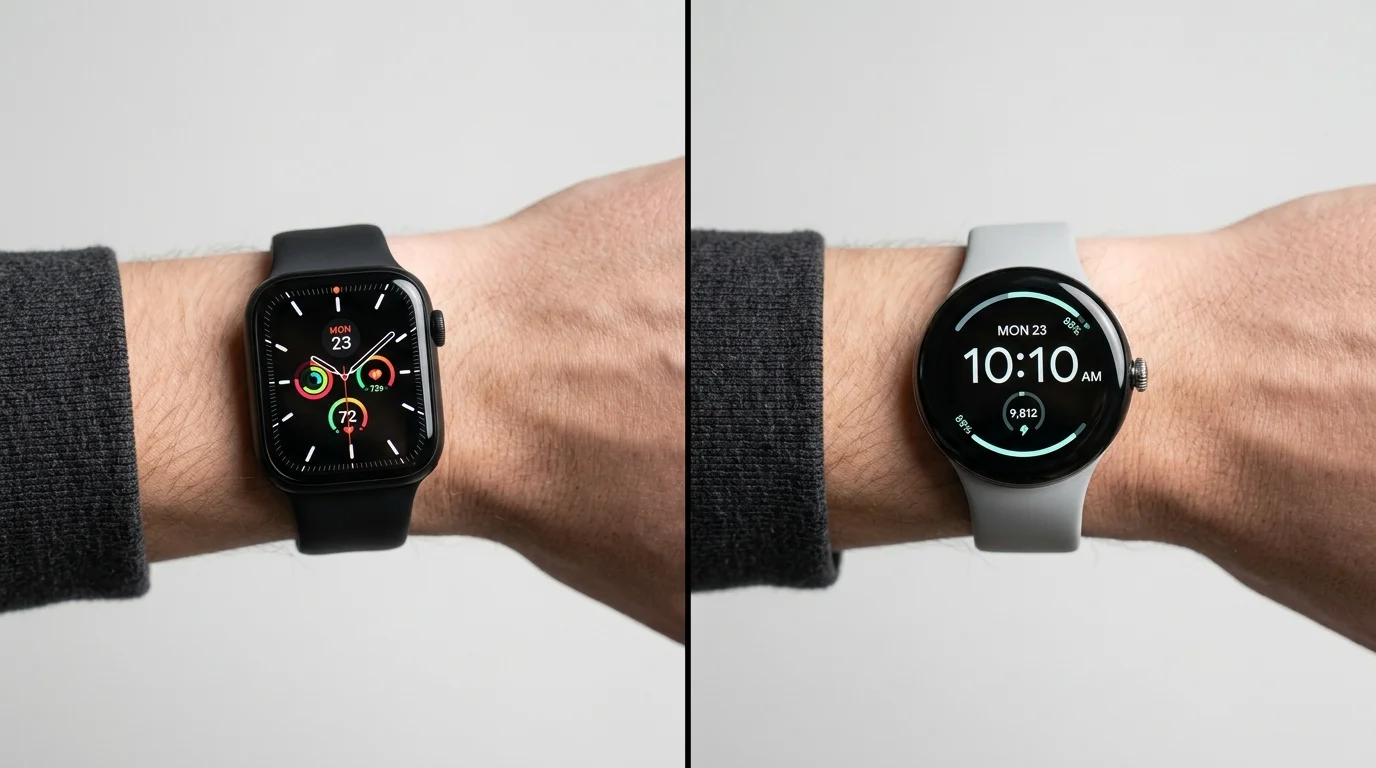
Apple has kept its rounded-square case shape for years. It’s familiar, but it doesn’t look like a traditional watch. Samsung offers a genuinely round face, which appeals to people who want their smartwatch to look more like a classic timepiece.
Samsung’s Classic models go further with a physical rotating bezel. You can scroll through menus and dismiss notifications just by turning it. It’s a small detail, but it makes the watch feel less like a tiny phone screen strapped to your wrist. Apple relies on the Digital Crown and touchscreen instead, which works well but feels more phone-like in daily use.
Battery Life: The Gap Is Bigger Than You’d Think
This is one of the clearest differences between the two platforms. Standard Apple Watch models typically last 18 to 36 hours on a charge. That usually means charging every single day, often overnight.
The Galaxy Watch lasts noticeably longer. Most standard models run 40 to 50 hours between charges, which stretches to roughly two days of normal use. If you hate the daily-charging routine, this alone might settle the decision for you. Both brands offer “Ultra” tier models built for multi-day battery life during heavy outdoor use, but even there, Samsung tends to hold a slight edge.
Health Tracking: Where Both Brands Compete Hardest
Health features are where both companies push the hardest each year, and both have genuinely strong offerings in 2026.
Apple leads with a mature ECG app, fall detection, crash detection, and detailed sleep tracking. Many creators and long-time Apple users specifically mention using the ECG feature on a weekly basis to check heart rhythm. Apple’s temperature sensing and wellness tools have also matured significantly since earlier generations.
Samsung’s standout feature is blood pressure monitoring, something Apple still doesn’t offer in the same form. Samsung also uses an AI-driven “Energy Score” that estimates whether your body is ready for intense activity or needs rest, based on sleep, heart rate, and recovery data. Both platforms include heart rate tracking, sleep staging, and workout detection, so the difference mostly comes down to which specific extras matter to you.
Software and App Experience
Apple’s watchOS benefits from the largest smartwatch app library available anywhere. Major fitness platforms build fully-featured Apple Watch apps with real-time metrics, which matters a lot if you rely on third-party training apps.
Samsung runs Wear OS with its own One UI Watch layer on top. Performance has improved significantly, especially for navigation and switching between apps. It doesn’t yet match Apple’s third-party app depth, but for core fitness and daily-use features, it holds up well.
Voice assistant support has also improved on both sides. Siri now handles commands faster and understands context better than in past years, with tighter integration into iPhone apps. Samsung’s assistant options have similarly become quicker and more reliable for everyday tasks like setting reminders or checking the weather.
Pricing: Where Samsung Has an Edge
Samsung generally undercuts Apple at the entry level. A standard Galaxy Watch typically costs less than the equivalent standard Apple Watch, making it an easier entry point for buyers who want core smartwatch features without paying flagship prices.
Apple does offer a lower-cost SE model that trims some premium features, like the always-on display and ECG, while keeping core functions like heart rate monitoring and fall detection. It’s a solid option for iPhone users who don’t need every high-end feature.
Durability and Build Quality
Both brands offer standard aluminum models and more rugged options built for heavier use. Apple’s higher-tier watches use a more durable glass that holds up well against everyday knocks, like accidental bumps against door frames or furniture.
Samsung’s Classic line uses stainless steel housing, which feels more premium in hand and pairs naturally with the physical rotating bezel. For genuinely rugged, outdoor-focused use, both companies offer Ultra-tier models with titanium cases, brighter displays, and significantly tougher water and shock resistance than their standard lineups.
Which One Should You Actually Buy?
If you own an iPhone, get an Apple Watch. The tight integration with iOS, the mature health tools, and the massive app library make it the clear pick for anyone already in Apple’s ecosystem.
If you own a Samsung or other Android phone, get a Galaxy Watch. You’ll get longer battery life, blood pressure monitoring, a more traditional watch design, and a lower starting price.
Trying to mix platforms an Apple Watch with an Android phone, or a Galaxy Watch with an iPhone leads to a frustrating, feature-limited experience on both sides. Match your watch to your phone first. Then choose the specific model based on your budget and how you plan to use it.
Last Line
The Apple Watch vs Samsung Galaxy Watch debate isn’t really about which platform is “better” overall. Both companies have built mature, capable ecosystems in 2026. The real question is which one fits the phone already in your pocket and the specific features you’ll actually use day to day whether that’s blood pressure monitoring, a rotating bezel, longer battery life, or the deepest possible iPhone integration.
Frequently Asked Questions
No, not in any meaningful way. The Apple Watch is built to pair exclusively with an iPhone. Without one, most of its core features simply won’t work.
Pairing is very limited and not recommended. The Galaxy Watch is designed around Samsung’s One UI and works best with a Samsung or other Android phone. Using it with an iPhone means losing most of its key features.
The Galaxy Watch, by a clear margin. Standard Apple Watch models typically last 18 to 36 hours, meaning daily charging. Standard Galaxy Watch models last 40 to 50 hours, which usually means charging every two days instead.
Yes. Blood pressure monitoring is one of Samsung’s standout health features and something the Apple Watch still doesn’t offer in the same form. Apple instead leads with ECG, fall detection, and detailed sleep tracking.
Generally, yes. A standard Galaxy Watch typically costs less than the equivalent standard Apple Watch, making it an easier entry point if you want core smartwatch features without paying flagship prices.