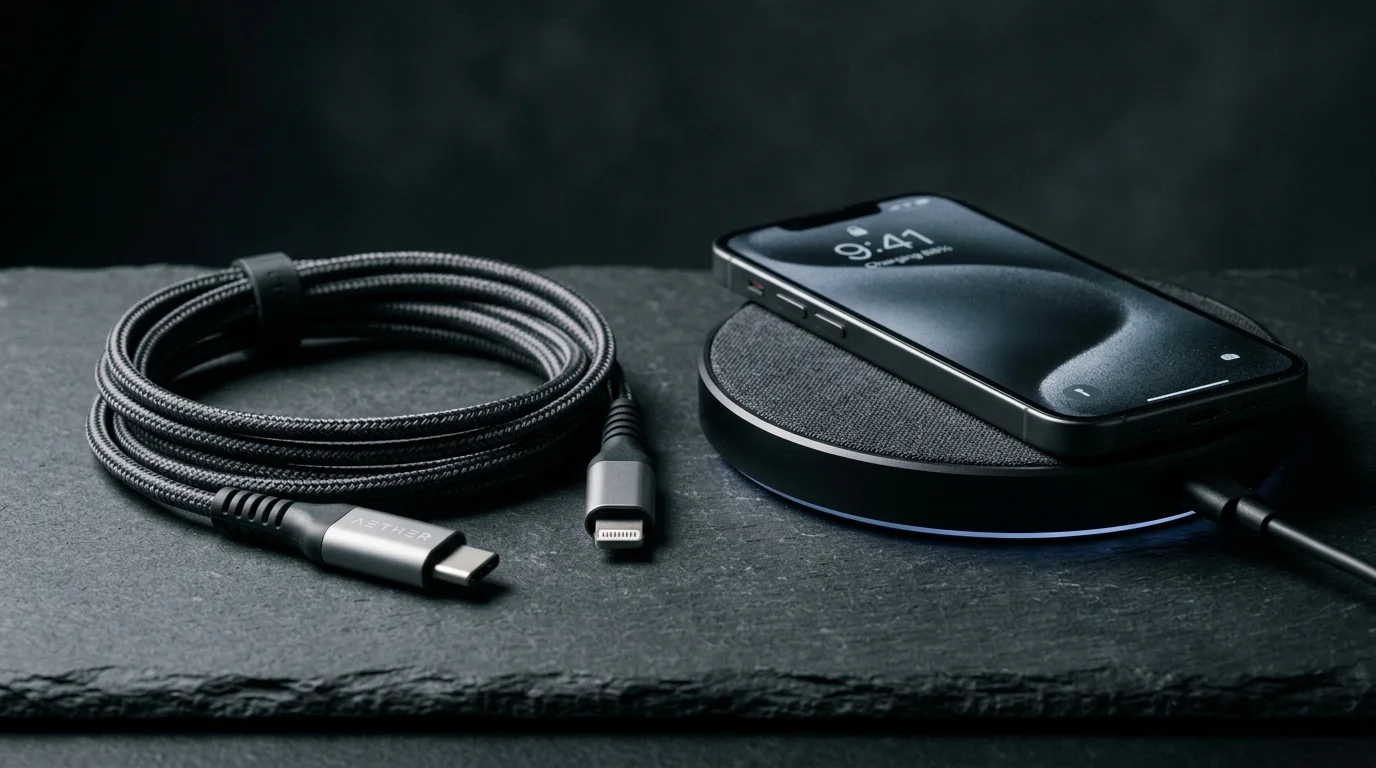
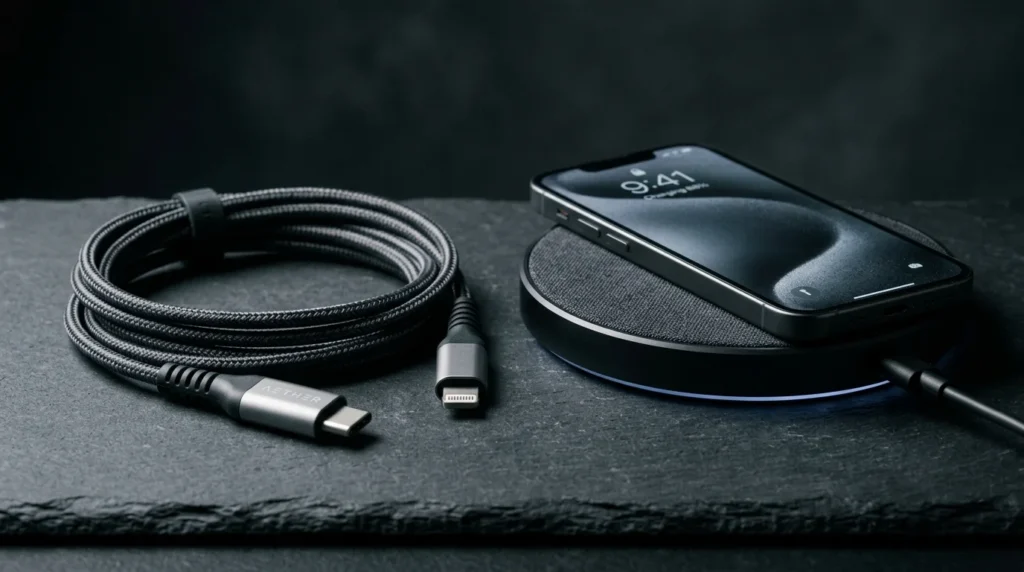
Charging technology has come a long way. Wired chargers now push well past 100 watts. Wireless pads have gotten faster and smarter too. But the two methods still work very differently. Understanding those differences helps you pick the right charger for your actual routine, not just whatever looks convenient in a store.
This guide breaks down speed, efficiency, battery health, and convenience. It compares both methods honestly, without pretending one is universally better than the other.
How Each Method Actually Works
Wired charging sends power directly through a cable into your device. The connection is physical and direct. Very little energy gets lost along the way.
Wireless charging works differently. It uses electromagnetic induction to send power through the air, across a small gap between a charging pad and your phone. This process is naturally less efficient. Some energy always gets lost as heat during that transfer.
The core difference comes down to how directly the power travels. A wired connection has almost nothing standing between the source and your battery. A wireless connection has to convert electricity into a magnetic field and then back into electricity again once it reaches your phone, and every conversion step gives energy a chance to escape as heat.
Speed: Wired Still Wins by a Wide Margin
This is the clearest difference between the two methods. Wired charging is typically two to four times faster than wireless. Modern wired chargers using USB Power Delivery can push well over 100 watts. Many phones charge to full in 30 to 40 minutes with a strong wired charger.
Wireless charging tops out much lower. Even the newest Qi2 standard maxes out around 25 watts on supported phones. A full wireless charge often takes 60 to 90 minutes or more. If you need a fast top-up before heading out the door, wired is the clear choice every time.
The gap tends to matter most in specific moments rather than day to day. Running late for a flight, realizing your phone is at 15 percent right before an important call, or needing enough charge to last through a long shift are all situations where wireless charging simply can’t keep pace with a good wired setup.
Efficiency: Where the Energy Actually Goes
Wired charging is highly efficient, often transferring more than 95 percent of the power it draws. Very little gets wasted as heat.
Wireless charging loses more energy in the process. Depending on the pad and alignment, efficiency typically sits somewhere between 70 and 90 percent. The rest gets lost as heat during the electromagnetic transfer. This isn’t a sign of a broken charger. It’s simply how the technology works.
For most people this efficiency gap shows up on the electricity bill more than anywhere else, and even then the difference is small. A wireless pad left charging overnight for years will use somewhat more electricity than a wired charger doing the same job, but the actual cost difference over a year is usually just a few dollars, not something worth losing sleep over.
Does Wireless Charging Damage Your Battery Faster?
This is one of the most common questions people ask, and the honest answer is nuanced. Heat is the real enemy of lithium-ion batteries, not the charging method itself. Wireless charging does tend to generate more heat than wired charging, which can lead to slightly faster battery degradation over several years of daily use.
In practical terms, the difference is small for most people. If you upgrade your phone every two to three years, the gap in battery health barely matters. If you tend to keep your phone for four years or longer, sticking mostly to wired charging can help preserve battery capacity a bit longer.
There are also small habits that reduce heat regardless of which method you use. Removing a thick phone case before wireless charging lets heat escape more easily. Avoiding charging your phone inside direct sunlight or under a pillow also helps, since trapped heat is usually what causes noticeable battery wear over time, not the charging method by itself.
Alignment Matters More Than You’d Think
Wireless charging is surprisingly sensitive to positioning. If your phone isn’t sitting exactly where the charging coil expects it, speed and efficiency both drop. A slightly misaligned phone can lose a meaningful chunk of charging speed without you even noticing.
Newer magnetic wireless systems solve this by snapping the phone into the correct position automatically. Standard flat pads without magnets don’t offer this guarantee, so alignment issues are more common with older or basic wireless chargers.
If you’ve ever picked up your phone in the morning expecting a full charge and found it barely moved overnight, a misaligned pad is often the culprit. It’s worth double checking the position each time you set your phone down, especially with non magnetic pads where there’s no obvious feedback telling you it’s placed correctly.
Convenience: Where Wireless Actually Wins
Speed and efficiency aren’t everything. Wireless charging offers a real convenience advantage. You simply set your phone down, without fumbling for a cable or matching up a connector in a dark room at night.
This makes wireless charging genuinely great for specific situations: your nightstand, your office desk, or a car mount during a commute. You’re not in a rush in these situations, so the slower speed doesn’t matter nearly as much as the ease of just placing your phone down.
There’s also less strain on your phone’s charging port over time, since you’re not repeatedly inserting and removing a connector every single day. For anyone who has dealt with a loose or worn out charging port, that alone can be a meaningful reason to lean toward wireless for everyday use.
Cable and Connector Wear Over Time
Wired chargers involve a physical connection that wears out over time. Cables can fray. Charging ports can loosen slightly after years of daily plugging and unplugging. This is a real, if usually minor, downside to relying entirely on wired charging.
Wireless charging avoids this wear entirely, since there’s no physical connector making contact with your phone. Over several years of daily use, this can mean fewer replaced cables and less wear on your phone’s charging port.
Cost Considerations
A basic wired charger and cable are usually cheaper upfront than a quality wireless pad, especially if you already own compatible cables. Higher wattage wired chargers with multiple ports can cost more, but they let you charge a phone, tablet, and laptop from a single adapter, which adds real value if you own several devices.
Wireless pads tend to cost more per unit but last longer physically, since there’s no cable to wear out. Over several years, the total cost between the two methods tends to even out for most people.
It’s also worth factoring in how many chargers you actually need. A single wired charger by your desk might be all you need if you rarely charge your phone anywhere else. But if you charge in the bedroom, at work, and in the car, buying three wireless pads adds up quickly compared to a couple of inexpensive cables paired with plugs you may already own.
Buying quality matters more than brand names here. A cheap, uncertified charger of either type can charge more slowly than advertised, run hotter than it should, or in rare cases pose a real safety risk. Looking for basic safety certifications and sticking to established manufacturers is a simple way to avoid these problems, regardless of whether you end up going wired or wireless.
Which One Should You Actually Use?
The honest answer is that most people benefit from using both, depending on the situation. Keep a wired charger for moments when speed actually matters, like a quick top-up before leaving the house, travel days, or gaming sessions where you want maximum power flowing in.
Use wireless charging for situations built around convenience rather than speed, like overnight charging on your nightstand, your desk at work, or a magnetic car mount during your commute. In these situations, the slower speed simply doesn’t matter, since your phone has plenty of time to charge anyway.
How to Choose the Right Charger for Your Needs
Before buying, think through your actual daily habits. If you frequently need fast top-ups before heading out, prioritize a high wattage wired charger with USB Power Delivery support. If you charge overnight or at a desk where speed doesn’t matter, a quality wireless pad adds genuine everyday convenience.
If you own multiple devices, a multi-port wired GaN charger can replace several individual chargers at once, saving both desk space and money compared to buying separate adapters for each device. If you plan to keep your phone for many years, lean more toward wired charging to help preserve long-term battery health. And if your phone supports magnetic wireless charging, prioritize that over a standard flat pad for more consistent alignment and speed.
Last Words
There’s no single winner in the wired versus wireless debate. Wired charging wins clearly on speed and efficiency. Wireless charging wins on everyday convenience and long-term cable wear. The smartest approach for most people is a hybrid one, using wired for the moments that need speed, and wireless for the moments that just need ease.
Understanding how each method actually works, rather than just chasing wattage numbers on a box, will help you build a charging setup that actually fits how you live day to day.
Frequently Asked Questions
Yes, by a wide margin. Wired charging is typically two to four times faster. A strong wired charger can fully charge a phone in 30 to 40 minutes, while wireless charging often takes 60 to 90 minutes or more.
The difference is small for most people. Heat is the real cause of battery degradation, and wireless charging does generate more of it than wired. If you keep your phone four years or longer, leaning toward wired can help preserve battery health slightly better.
This is normal. Wireless charging uses electromagnetic induction to send power through the air, and some energy always gets lost as heat in that process. It isn’t a sign of a broken charger.
Yes. If your phone isn’t positioned exactly over the charging coil, speed and efficiency both drop. Magnetic wireless systems solve this by snapping the phone into place automatically, while standard flat pads don’t guarantee proper alignment.
Most people benefit from using both. Wired works best when speed matters, like a quick top-up before heading out. Wireless is great for overnight charging, a desk, or a car mount, where convenience matters more than speed.